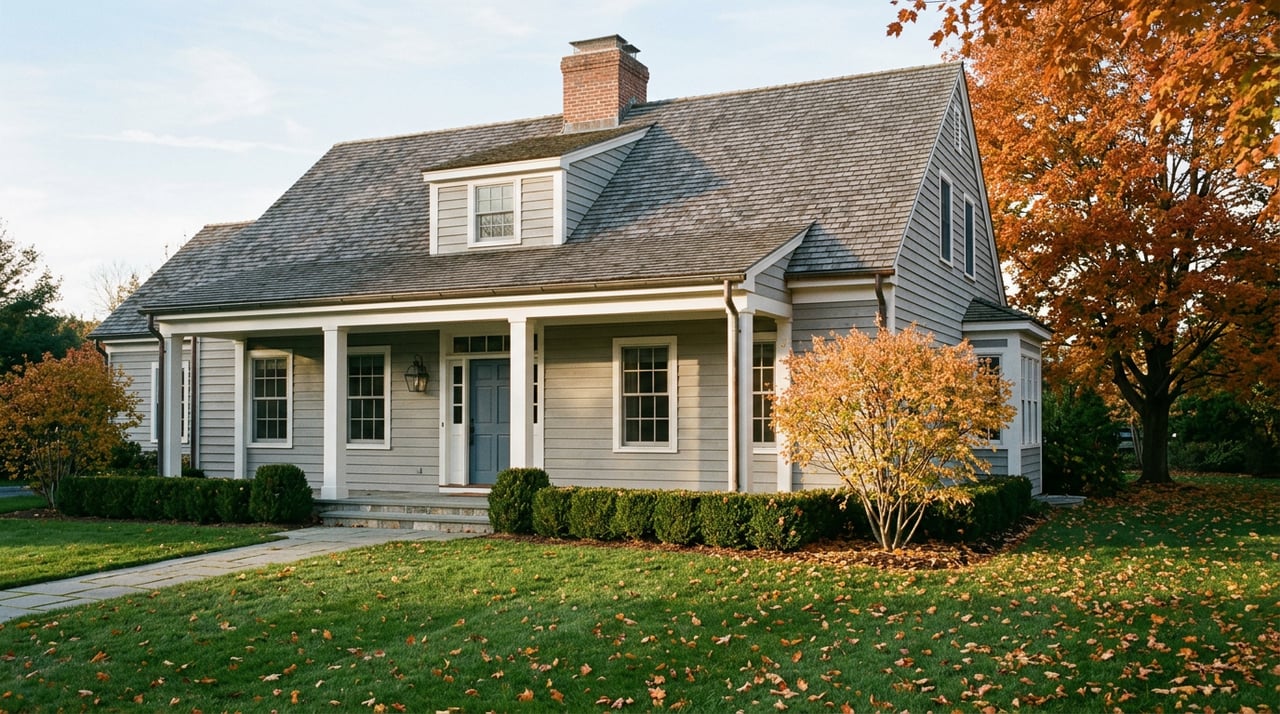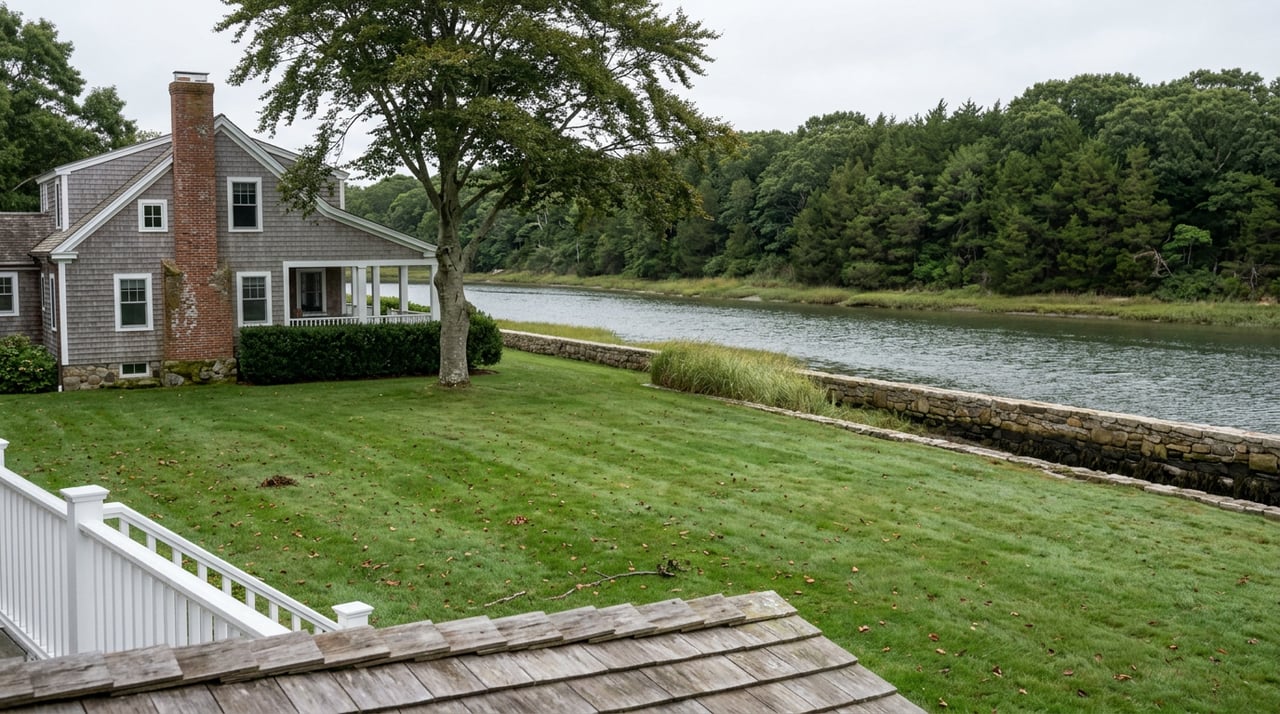
"We're all in this together," Board of Finance member Jeff Hammer told the room in May, moments before the board voted to set Westport's new mill rate at 13.2, down from 18.86 the year before. Board Chair Danielle Dobin added that the town was trying to keep in mind Westporters on fixed incomes as the numbers landed. Both comments were sincere. Neither one changes what actually happened to most residential tax bills this year, which is that they went up, in some cases by real money, in the same breath as a headline 30 percent rate cut.
That gap between the rate and the bill is not a rounding error or a one-year fluke. It is the direct, arithmetic result of Westport's 2025 townwide revaluation, and it is the single most important number for anyone buying, selling, or holding property in town right now.
The Mechanics Behind the Mill Rate Drop
Connecticut requires every municipality to revalue all real property once every five years, and Westport's turn came due for the Grand List of October 1, 2025. The town hired Vision Government Solutions, the Massachusetts firm that has handled every Westport revaluation since 2005, at a cost former Board of Finance chair Brian Stern reported at roughly $750,000 in his Westport Journal column on the process. Vision's appraisers spent 2025 inspecting properties, verifying square footage and condition, and pricing the town against two years of actual sales.
When First Selectman Kevin Christie announced the results in early December 2025, the numbers were stark: residential values had risen an average of about 61 percent since the 2020 revaluation, while commercial values had risen only about 17 percent. Compass Concierge or curb appeal aside, that single gap between how fast homes and businesses appreciated is what reshaped everyone's tax bill this year.
Connecticut law treats assessed value as 70 percent of fair market value, and a revaluation is explicitly designed to be revenue neutral at the town level. The town does not collect more money simply because home values went up. It just decides who pays what share of the same budget. When the Board of Finance approved the fiscal year 2026-27 mill rate of 13.2 on May 20, that was the mechanism working exactly as designed. The rate fell because the Grand List grew by more than 50 percent, according to Finance Director Gary Conrad. What the rate cut does not do is protect any individual homeowner from a bill that reflects the new, higher value of their specific house.
The Math Homeowners Are Actually Living With
Here is where the abstraction becomes a dollar figure. According to Westport Journal's reporting on the path from the town's 2027 budget to individual tax bills, the average assessed value of a Westport residence rose from $998,697 under the old valuation to $1,557,757 under the new one, a 55 percent increase. Layer the new 13.2 mill rate on top of that, and a homeowner whose property tracked close to the town average sees a bill that is still roughly 11 percent higher than it was last year, even after a mill rate that dropped by 30 percent.
| Old (FY2025-26) | New (FY2026-27) | |
|---|---|---|
| Mill rate | 18.86 | 13.2 |
| Average residential assessment | $998,697 | $1,557,757 |
| Approximate change to average bill | baseline | up roughly 11% |
The lower mill rate is real. So is the higher bill. Both numbers came out of the same process, and a homeowner who only reads the first one is going to be surprised by the second.
Why the Coastline Isn't Absorbing This the Way It Used To
Location matters inside this story too, and it matters in a way that runs against the usual assumption about Westport real estate. Town Assessor Paul Friia told Westport Journal that home values north of I-95 rose about 66 percent on average during this revaluation cycle, compared with about 57 percent south of the highway. That is a reversal of the longer historical pattern, in which waterfront and near-shore neighborhoods like Compo and Saugatuck typically appreciated faster than inland areas.
The practical read for anyone comparing Westport neighborhoods: a north-of-95 buyer or seller should expect their new assessment to have moved further from the old one than a comparable property closer to the water, which changes the size of the tax swing even for two homes that sold for similar prices. On the commercial side, the town's own reporting pointed to properties like Bridgewater Associates' office campus at Nyala Farm as an example of the kind of large commercial asset that grew in value far more slowly than the typical single-family home over the same five years, which is a meaningful part of why residential owners are now carrying a bigger share of the town's tax base.
The Gap Between the Listing and the Bill
This is the part that actually catches buyers off guard mid-transaction. Westport's first tax bills reflecting the new assessed values and the new 13.2 mill rate went out starting in July 2026. Any home currently on the market, or any home a buyer toured earlier this year, may still be carrying a tax figure on the listing sheet, on a portal, or in an old MLS field that reflects the prior 18.86 mill rate and the pre-revaluation assessment. That old number is not fraudulent. It is just stale, and it can meaningfully understate what a new owner will actually escrow for property taxes starting with their first full cycle in the home.
Before writing an offer on a Westport property, it is worth pulling the current assessed value directly from the Assessor's Office rather than trusting a printed tax line that may predate the revaluation entirely. Anyone comparing towns for a move should do the same thing on both sides of the comparison, since a neighboring town's "current" tax figure could be sitting on an entirely different point in its own five-year cycle. For sellers, the same gap cuts the other way. If your listing still shows last year's tax number, a buyer's lender or attorney will eventually catch the discrepancy during underwriting, and it is a far smoother conversation to have upfront than at the closing table.
How This Lines Up Against the Rest of Fairfield County
Westport is not alone in this cycle. Conrad told the Board of Finance in May that Fairfield experienced nearly identical shifts between residential and commercial property values during its own 2025 revaluation. Weston, Wilton, New Canaan, and Darien had already worked through their revaluation years earlier in the rotating five-year schedule, which means their current tax bills are not carrying the same kind of one-year jolt Westport and Fairfield are absorbing right now. That is a difference in timing within the cycle, not necessarily a difference in long-term tax burden, and it is worth asking about explicitly when comparing carrying costs across towns rather than relying on a single year's snapshot.
A Short FAQ
Does the new mill rate change what I pay on my car? Yes, but not by the same math as your home. Motor vehicles are assessed annually at 70 percent of retail value on a set depreciation schedule, separate from the five-year real estate cycle, so a lower mill rate does translate more directly into a lower vehicle tax bill.
I'm closing on a Westport home this fall. Whose number applies? The assessed value and mill rate in effect at closing determine the prorated taxes split between buyer and seller, so confirm the current post-revaluation assessment with the Assessor's Office rather than relying on a figure from the listing or an older tax record.
Can I still appeal my assessment? The formal appeal window for this revaluation cycle, through the Board of Assessment Appeals, closed February 20, 2026. Future corrections would need to wait for the next scheduled cycle or a documented change in the property itself.
Property taxes are one piece of a much larger decision, but they are the piece most likely to surprise a buyer after the ink is dry. If you are weighing a purchase or a sale in Westport and want a clear-eyed read on what a specific property's assessment actually means for your budget, Jennifer Twombly can walk through the current numbers with you before you write an offer or set a list price. Start with a Request Your Home Valuation to see where your property landed in this cycle.